Bali, Indonesia's spiritual destination where the sacred meets the world
A transformative journey of faith, ancestral culture, and sacred nature intertwined in silent rituals and experiences of deep inner connection.
Bali is an island that touches the soul of those who visit it. Its uniqueness lies in the fact that it is the only Hindu territory in Indonesia, a predominantly Muslim country. This characteristic creates a unique cultural and spiritual setting, where religion is not just a practice, but the thread that weaves together everyday life.
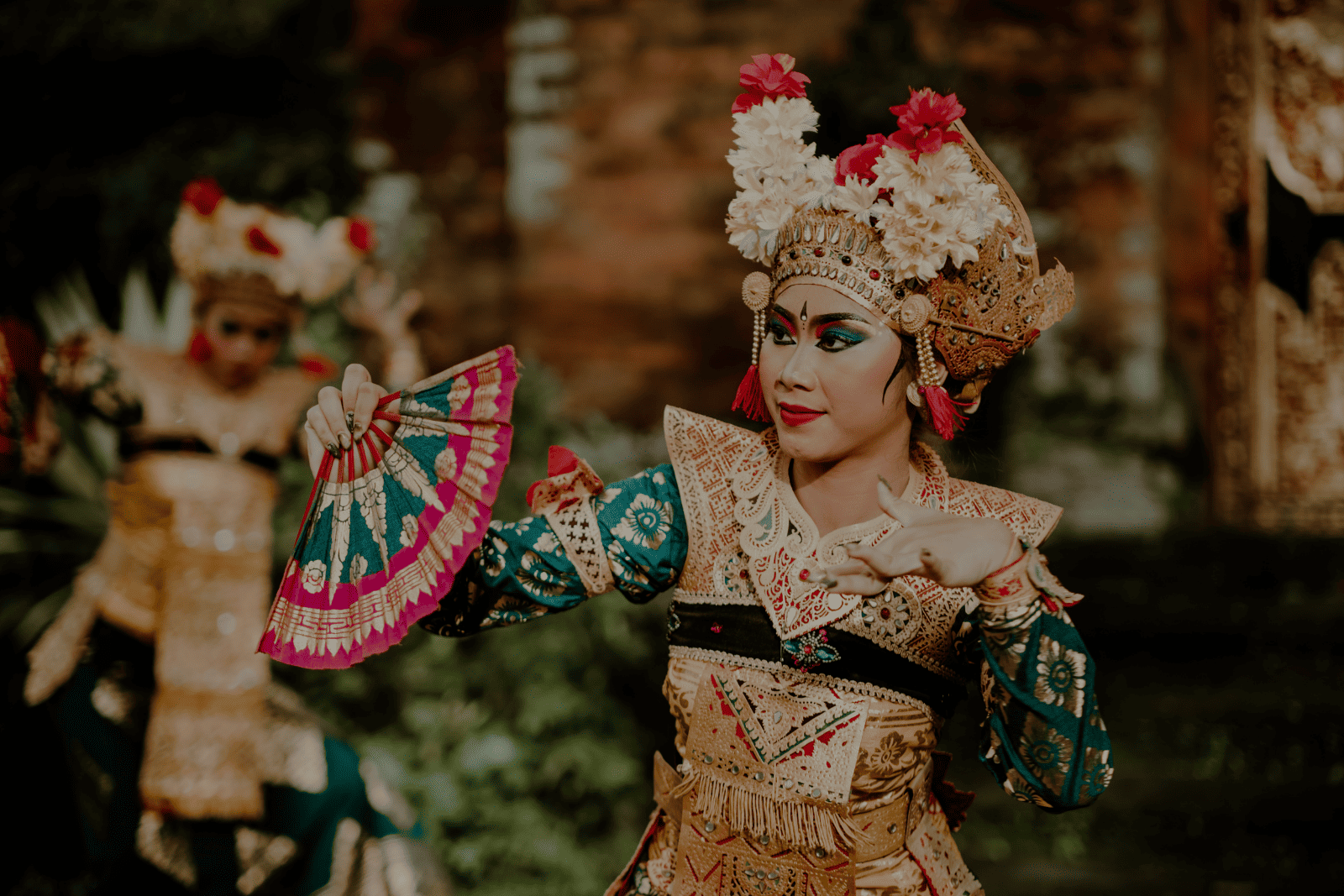
The Balinese faith, known as Agama Hindu Dharma, is a delicate fusion of classical Hinduism and local beliefs of animist origin. This spirituality manifests itself in a subtle but constant way in rituals that permeate everyday life, from the simplest gestures to collective celebrations. Visitors are naturally enveloped in an atmosphere of respect and contemplation, which requires no prior understanding, only presence and sensitivity.
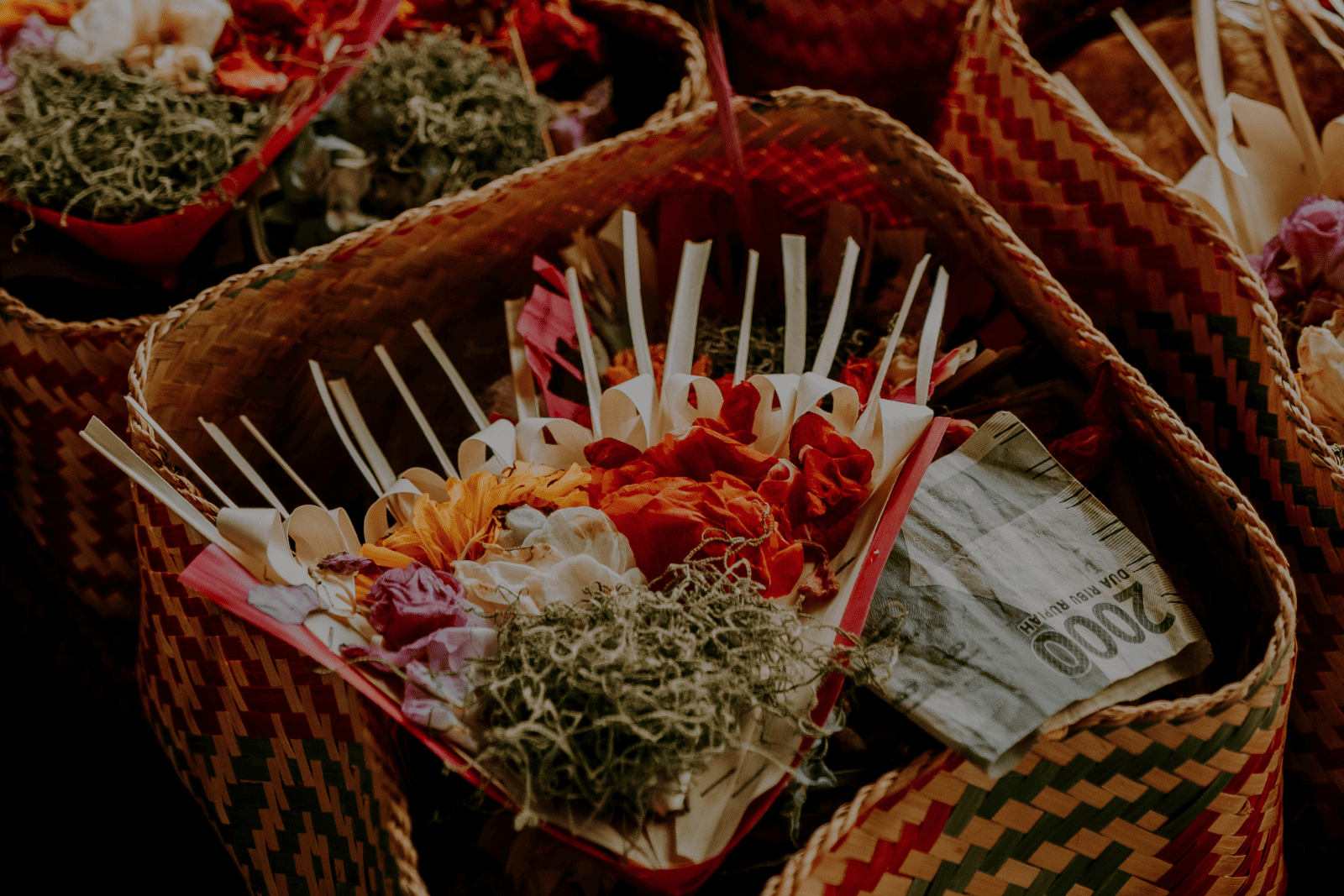
At dawn each day, Balinese women prepare offerings in small baskets of leaves, flowers, and incense. These offerings, called canang sari, are carefully placed on domestic altars, sidewalks, store entrances, and temples. They represent gratitude, balance, and connection with the divine. By observing this daily gesture, visitors understand that in Bali, spirituality is presence, and faith is silent action.
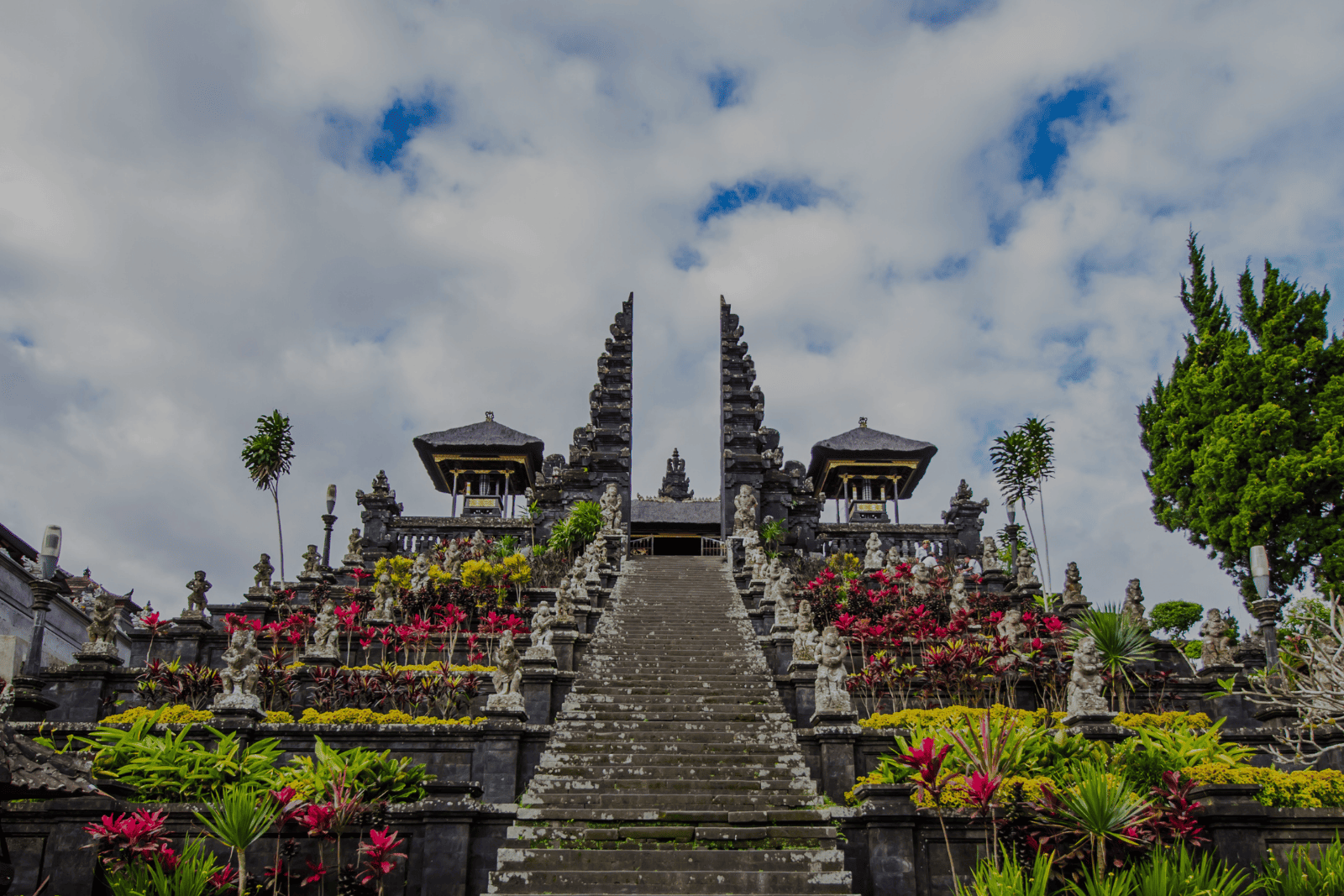
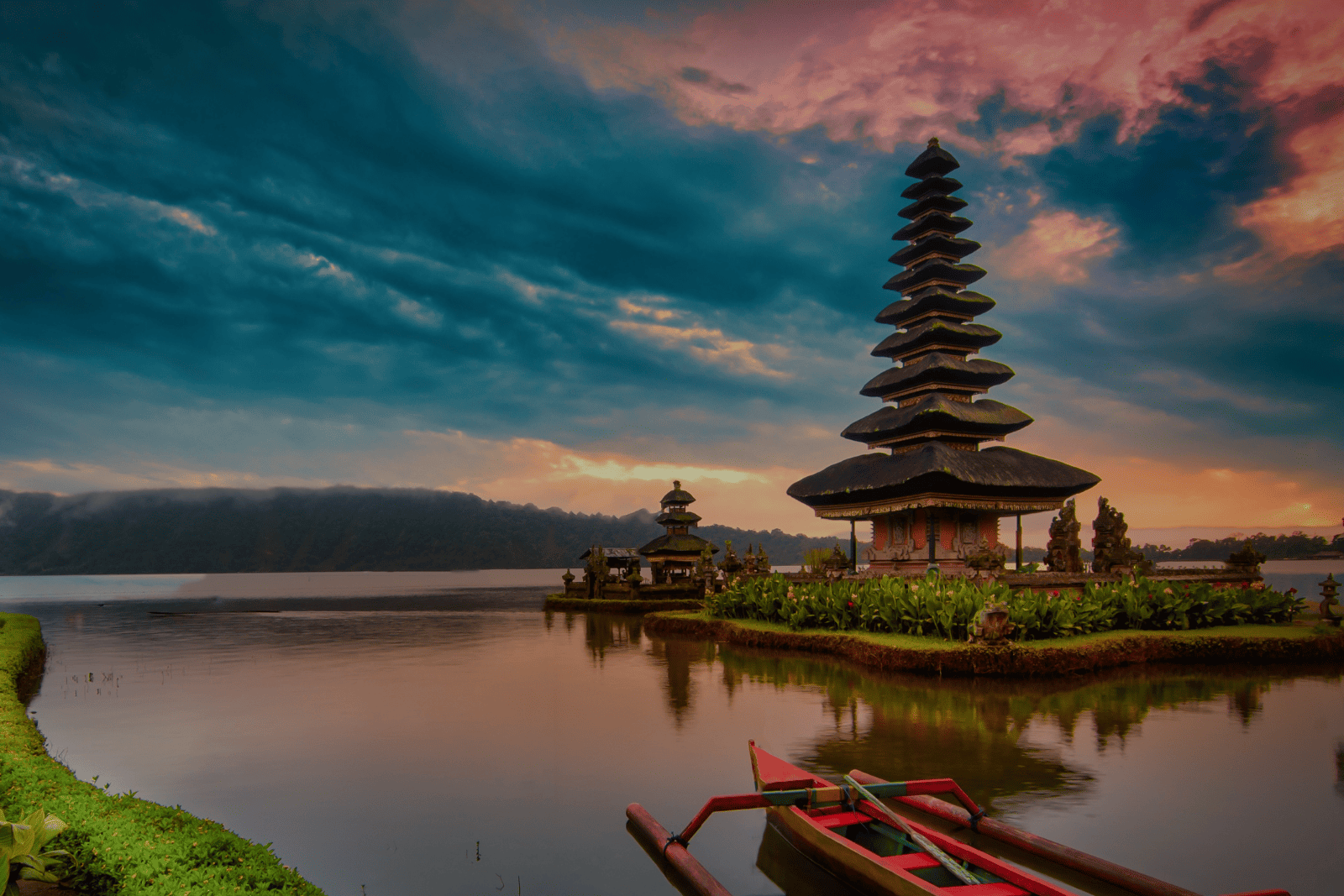
Temples are the visible expression of this devotion. Visiting Pura Besakih, known as the Mother Temple, is to enter an ancestral complex built on the slopes of Mount Agung, the island's most sacred volcano. Pura Ulun Danu Bratan, which seems to float on the calm waters of Lake Bratan, offers an ethereal atmosphere, where nature and silence meet in perfect balance.
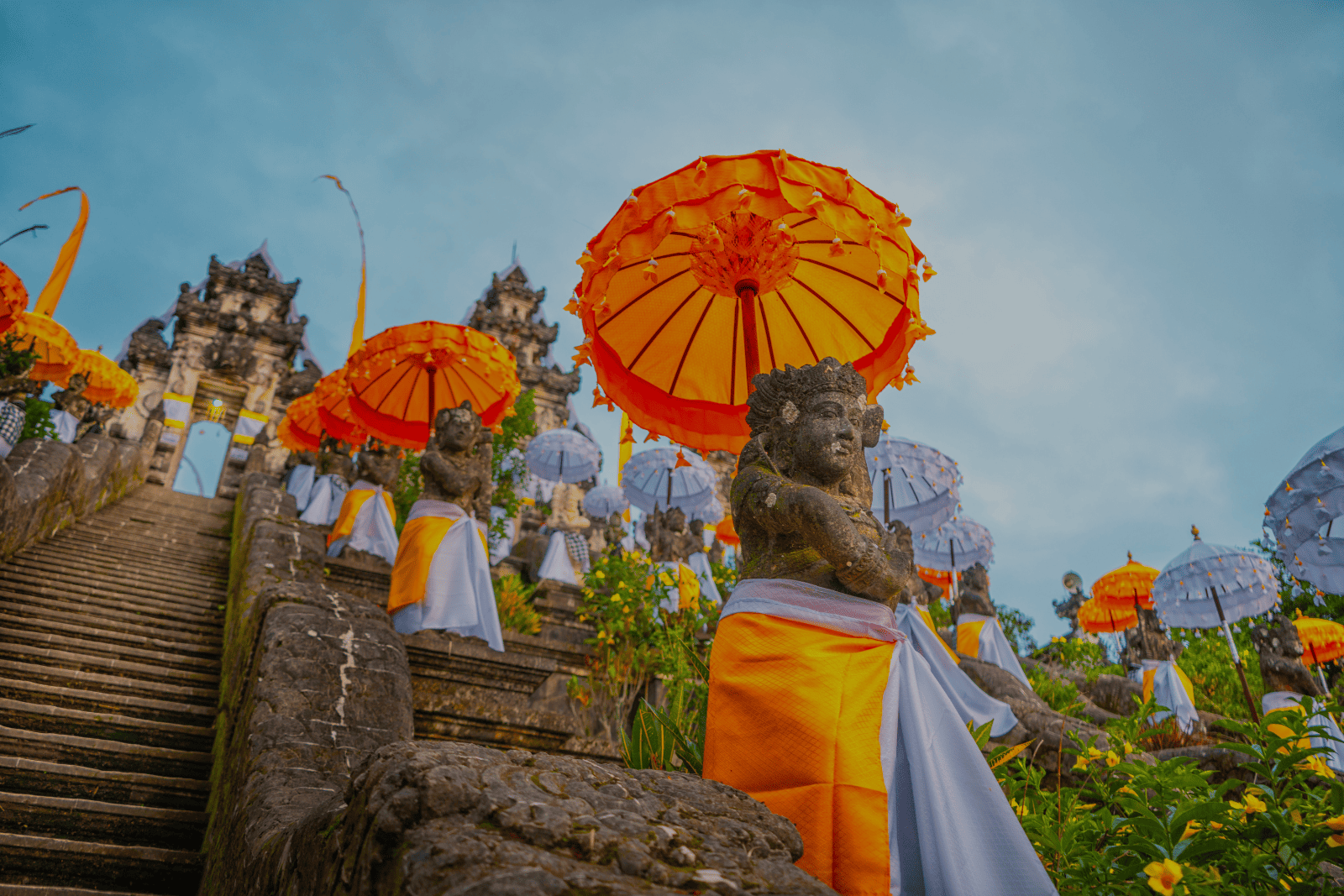
In addition to the large temples, there are small shrines hidden in villages or deep in the forest, where ancestral rituals are still alive. In these spaces, the spiritual connection intensifies, revealing an even more intimate dimension of Balinese faith.
Religion in Bali is experienced collectively. Throughout the year, the island celebrates various festivals that transform everyday life with music, color, and symbolism. Galungan, for example, celebrates the victory of good over evil and colors the streets with flower-covered altars and bamboo ornaments called penjor. With each celebration, the island pulsates in communion with its roots.
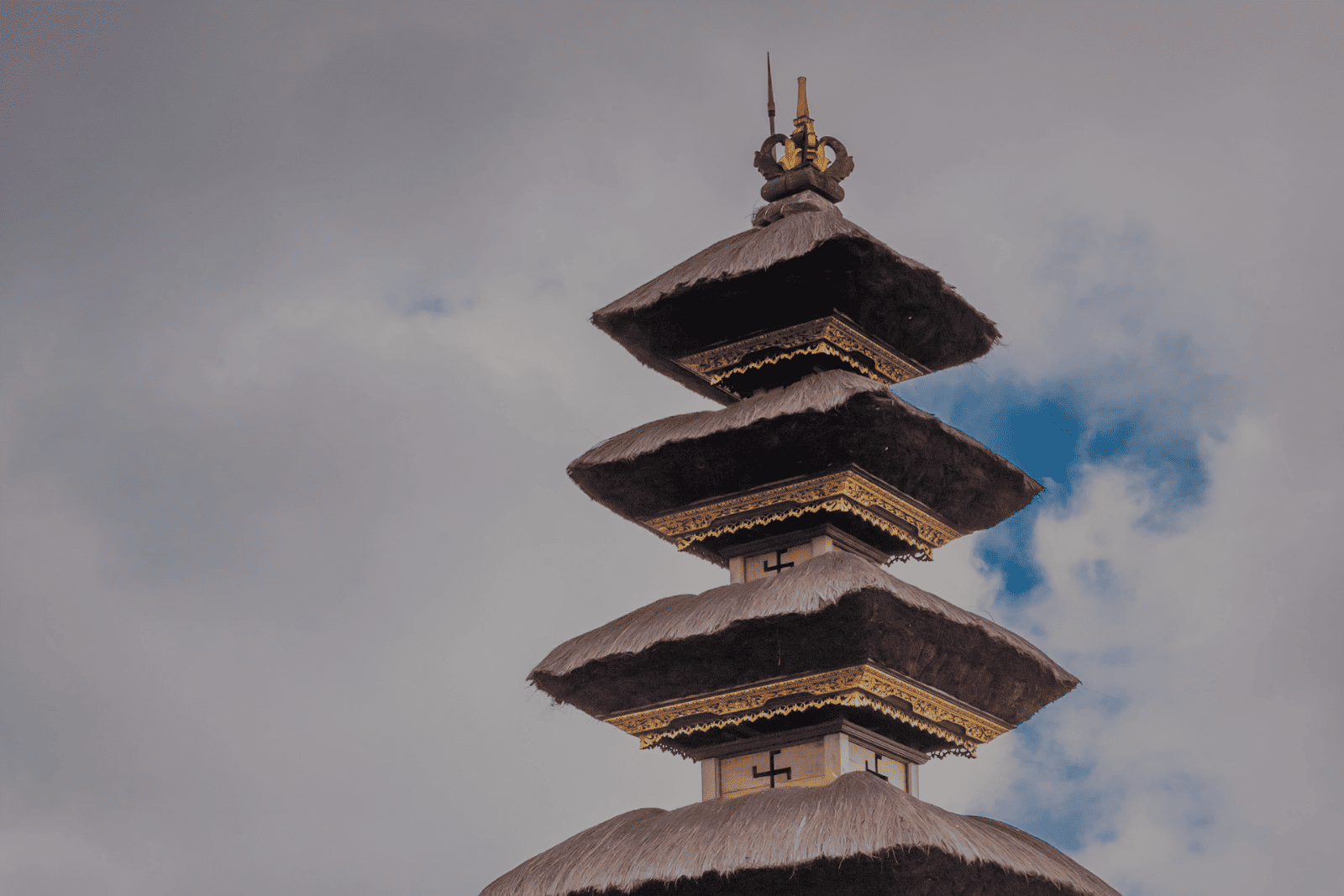
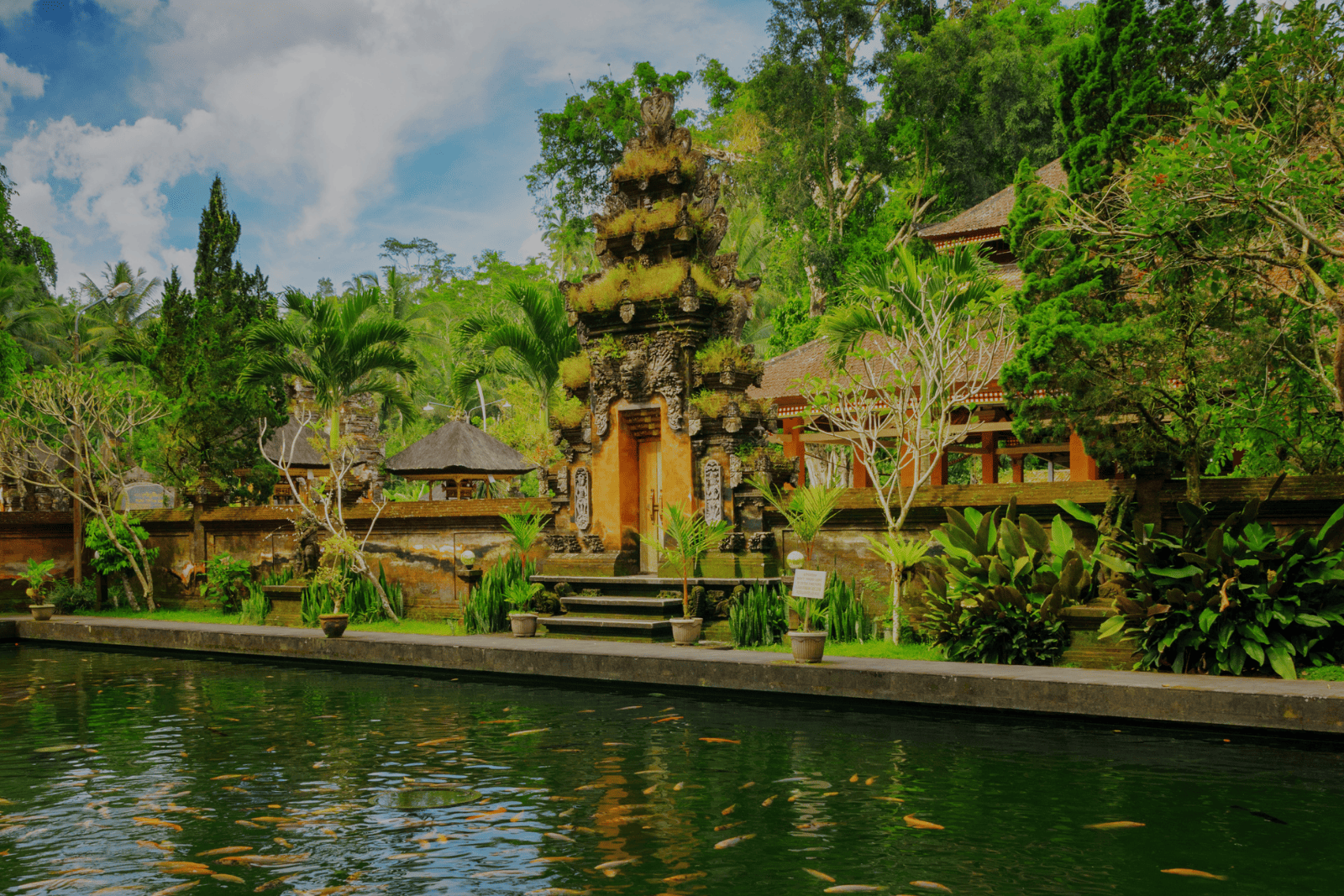
For those who want a deeper experience, Bali offers purification experiences in sacred springs. At the Tirta Empul temple, it is possible to immerse oneself in ceremonial waters that symbolize rebirth and spiritual renewal. Many describe this immersion as a turning point, a moment to leave behind what no longer serves and make room for the new.
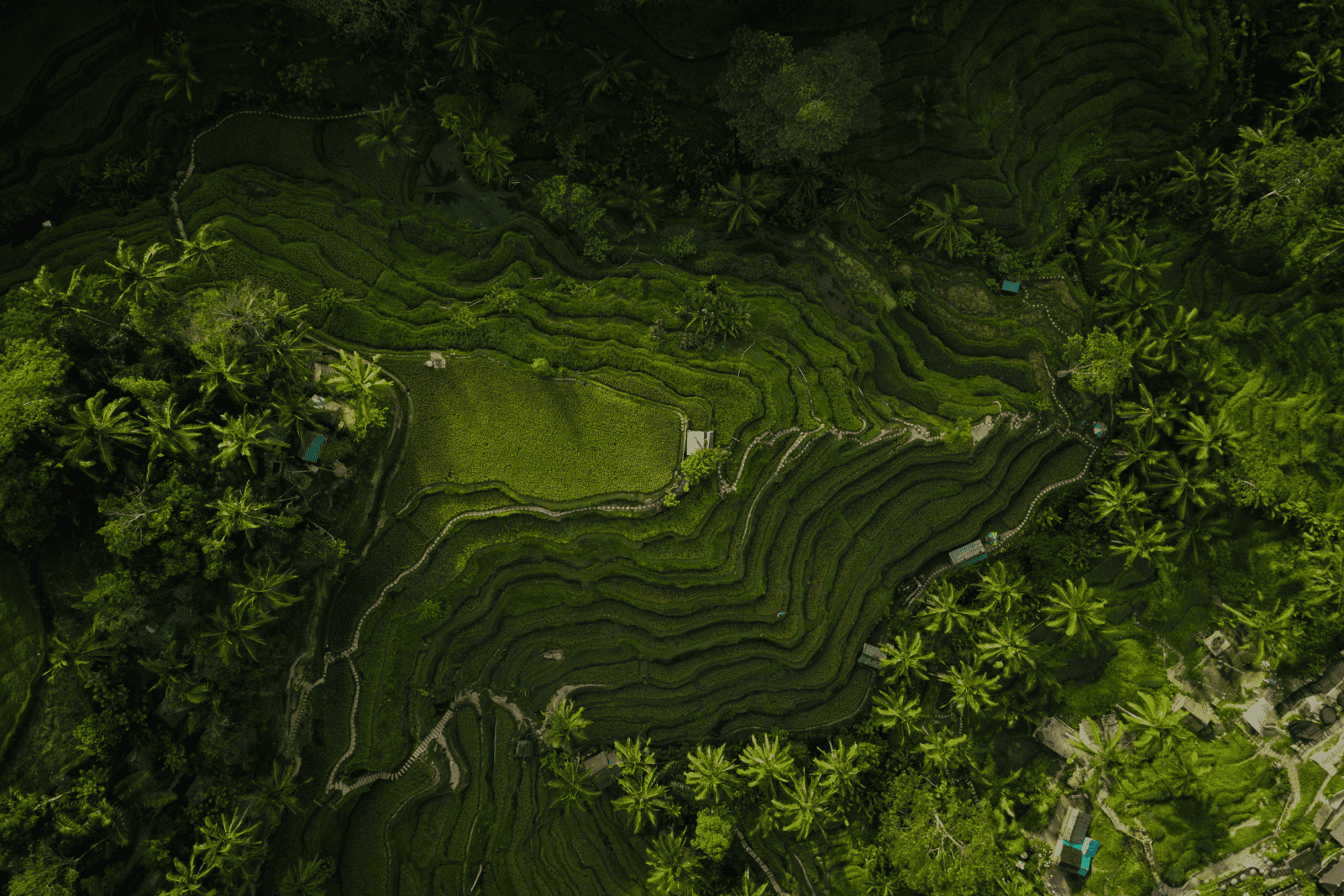
Nature also participates in this sacred balance. The terraced rice fields are much more than stunning landscapes. They are part of an ancestral irrigation system called subak, which expresses the harmony between agriculture, spirituality, and community. Recognized by UNESCO as a World Cultural Heritage Site, subak is a living example of the wisdom that guides the relationship between man and the earth.
To know Bali is to allow yourself to go beyond traditional tourism. It is to accept an invitation to retreat, to listen inwardly, and to pause intentionally. Spirituality is found in temples, offerings, artistic expressions, and the small rituals that permeate the island's routine. It is also in the slower pace of life, in the meaningful silences, and in the kindness with which the Balinese people welcome visitors.
Many travelers report finding something rare in Bali: a sense of reconnection with the essential. If you are looking for more than exotic landscapes and want to live an experience with purpose, connection, and authenticity, Bali is the ideal place. Discover Balinese temples, immerse yourself in its ancestral culture, and allow yourself to feel silence as a form of presence.
Bali is not just a place to visit, it is a place to feel. Plan your trip with purpose and discover a destination that invites you to pause, be present, and truly connect.


